Design, Culture, and Decision-Making in Complex Contexts
Grounded in Indigenous Ways of Seeing and Responsibility
By making underlying assumptions visible, the work supports better decisions in complex environments where cultural, social, and ethical consequences cannot be separated.

BIO
Herman Piʻikea Clark
Herman Piʻikea Clark works at the intersection of design, education and cultural practice, drawing on Kanaka Maoli (Indigenous Hawaiian) ways of knowing to support understanding, learning, and alignment in complex contexts. His work is grounded in Pacific indigenous visual storytelling and relational practice, informed by mo’olelo (oral tradition) and deep connections between people and place.
Guided by the concept of Makawalu - seeing the world through multiple perspectives - Clark uses creativity, visual storytelling, and design as methods for surfacing meaning, responsibility and cultural context. Rather than producing work solely for display, his practice creates shared understanding and opens space for reflection, dialogue, and more thoughtful decision making.
In addition to his creative practice, Clark works with educators, institutions, and organizations to explore how design and storytelling can function as vehicles for learning, cultural continuity, and transformation. He is currently a professor in the Faculty of Design at OCAD University in Toronto, Canada where he continues to develop approaches to design and education that are relational, place based and accountable to people, communities and the land.
Enter the work. Listen to the stories. See with eight eyes.
SELECTED PROJECTS: ART & DESIGN AS PRACTICE
-
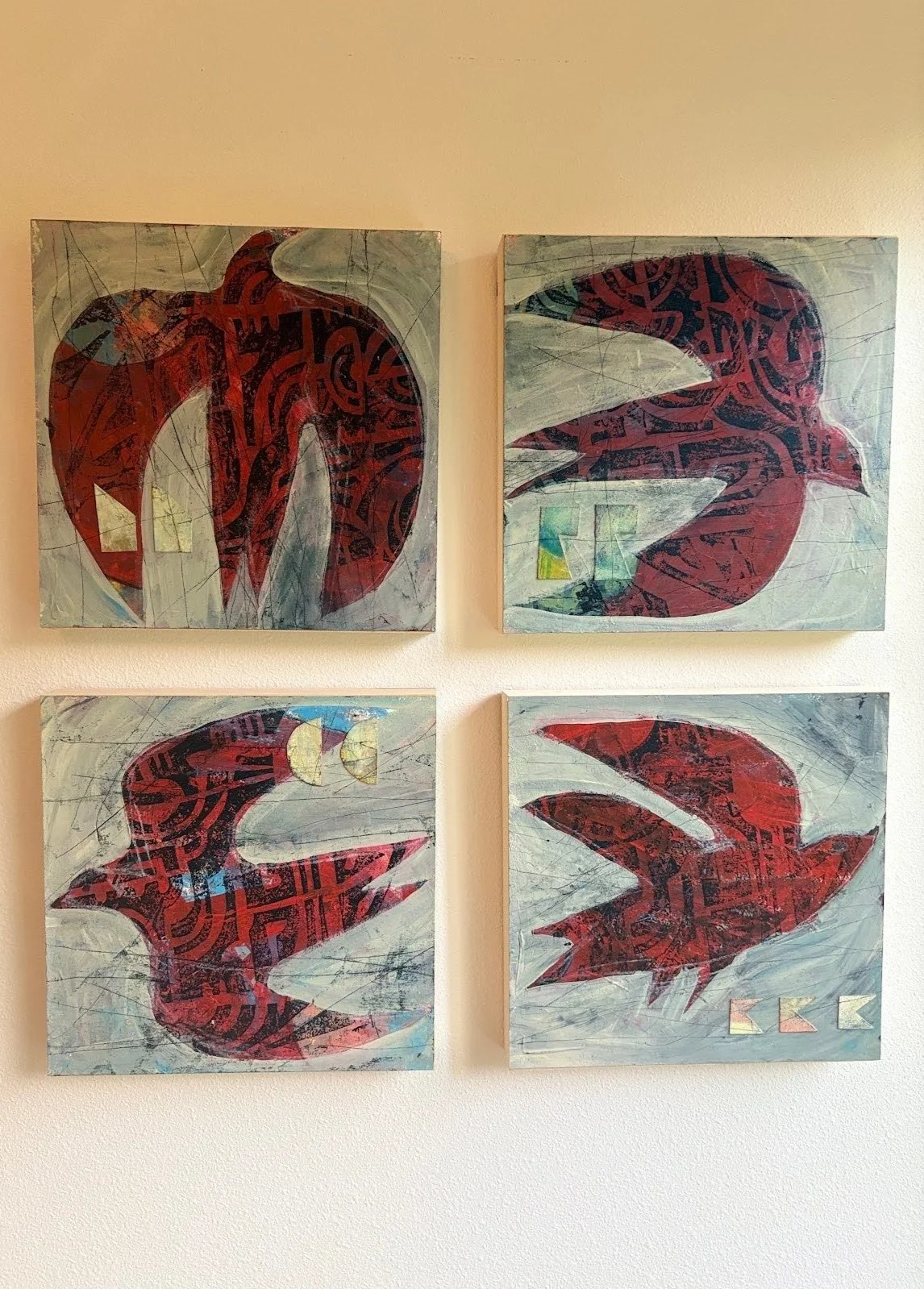
![Four square paintings on a wall featuring stylized indigenous bird and leaf silhouettes with abstract backgrounds.]()
Manu Ula
2024, Mixed Media
Private Collection -
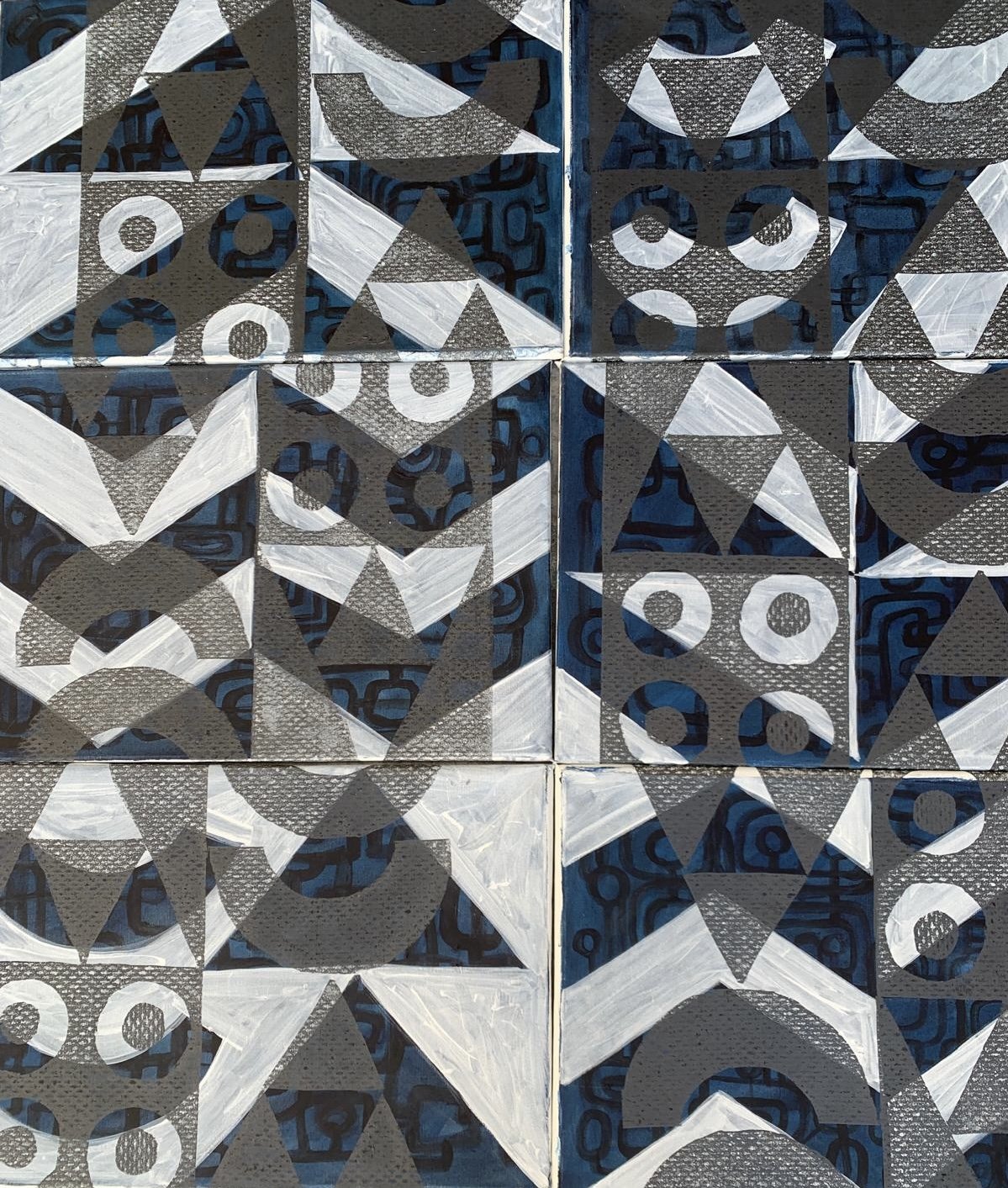
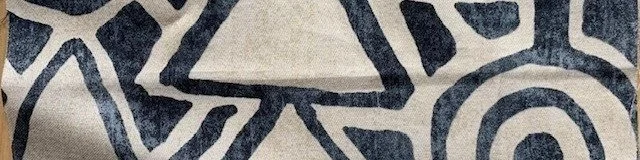
![A geometric mosaic pattern with black, white, and dark blue tiles arranged in various shapes including circles, triangles, and squares.]()
Noho Maka‘ala
2022, Acrylic on Canvas
Retailing -
![Colorful abstract drawings, each enclosed in a small square, with scribbled signatures and random scribbles at the bottom.]()
Akua Studies
2022, Mixed Media
Artist’s collection -
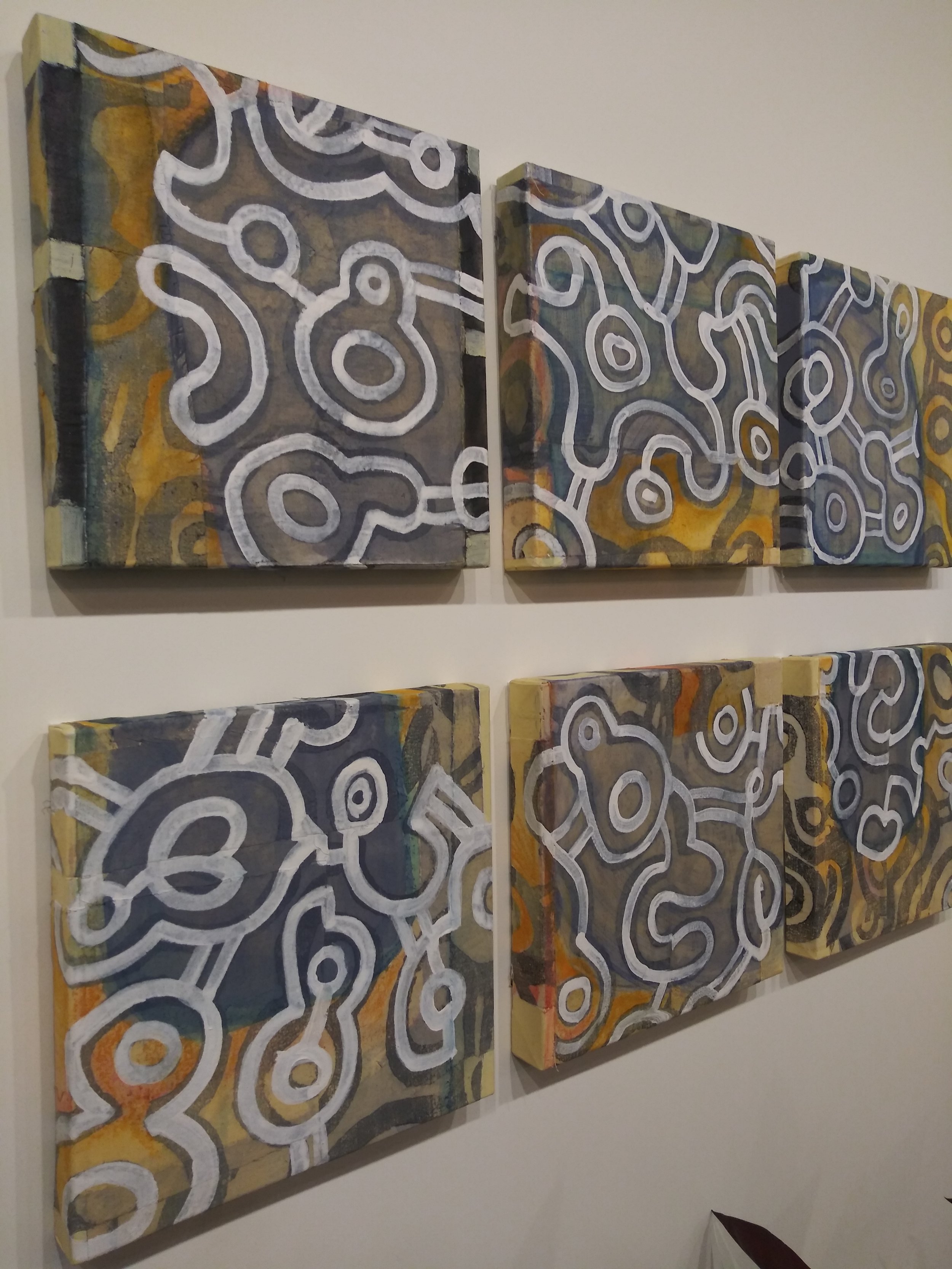
![Six abstract paintings with interconnected white lines on multicolored backgrounds, arranged in two rows on a gallery wall.]()
Pilina
2018, Acrylic on Canvas
Private Collection -
![Multiple framed abstract artwork pieces with geometric designs and symbols in shades of blue, red, black, and green, laid on a surface.]()
Ala Niho
2022, Relief Print Series on waxed birch ply
Retailing -
![A framed geometric abstract art piece composed of multiple panels with black and white shapes including circles, triangles, and semi-circles on a dark wall.]()
Makawalu Kapa‘ohua
2022, Relief print series on Plexi
Okukai Store, Queens Marketplace, Waikoloa, Hawaii



Selected projects demonstrating how creativity, visual storytelling, and design support clarity, alignment, and effective decision-making.
I work with institutions, organizations, and communities at moments where decisions carry cultural, social, and ethical consequence — and where clarity and alignment are essential.
LATEST NEWS
-
![A person looking at and examining artwork or a map on a wall.]()
Connecting Through Practice: Projects, Writing and Engagements
This space shares ongoing projects, writing, and collaborative engagements that explore how creativity, visual storytelling, and cultural knowledge can support learning, alignment, and meaningful exchange across contexts.
The work documented here reflects long-term relationships with indigenous communities, educators, and organizations, and highlights practices grounded in responsibility, reciprocity and care. These projects demonstrate how story and creative process can open dialogue, strengthen understanding, and support ethical, cross-cultural work.
-
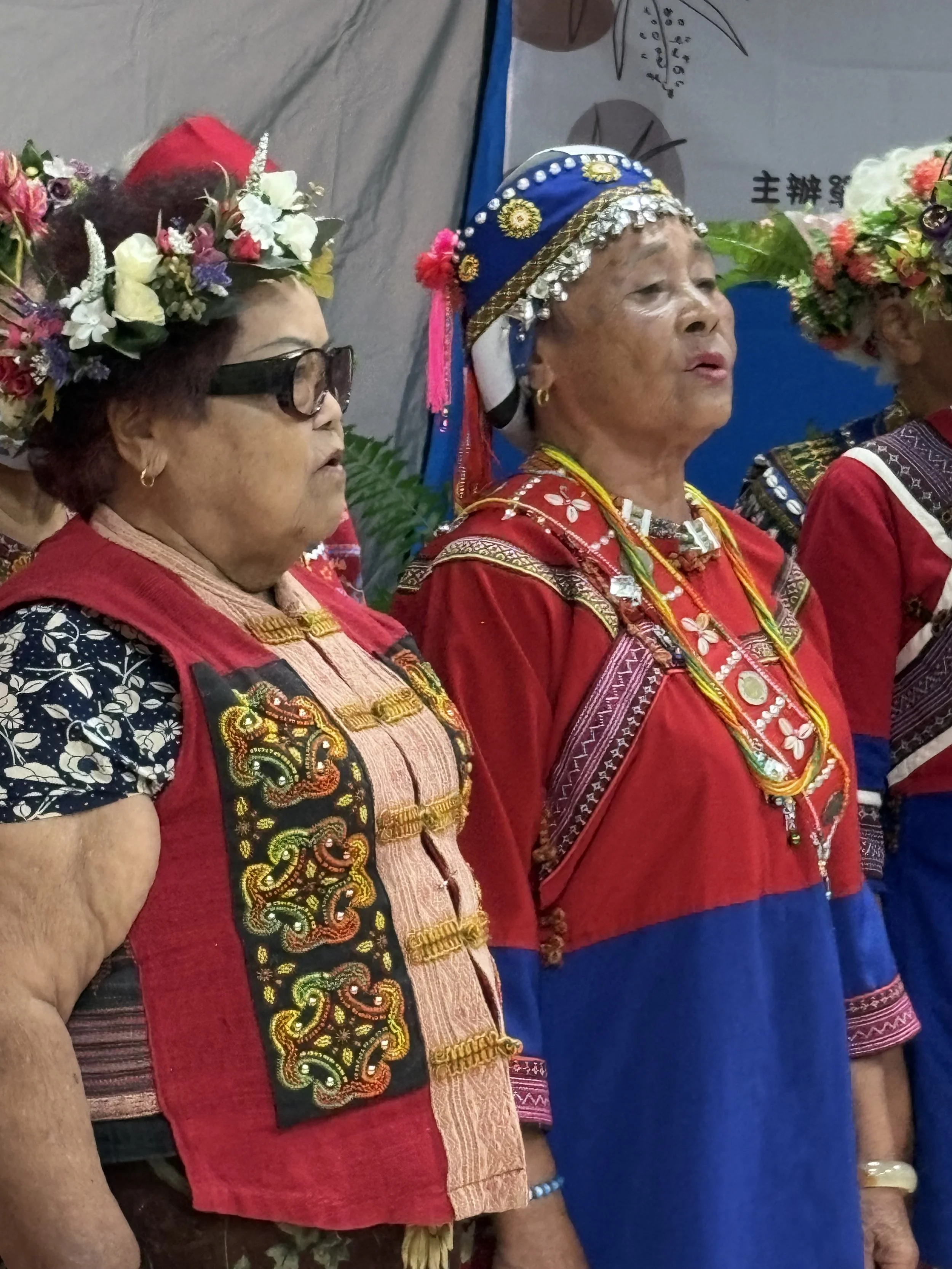
![Gaoshi Tribe Elders,]()
Cultural Exchange project, Gaoshi Village, Taiwan
This project reflects a collaborative cultural exchange with Paiwan and Gaoshi Indigenous communities in Taiwan, grounded in shared learning, ancestral storytelling, and deep Austronesian connections. The work was shaped through Indigenous-to-Indigenous dialogue, guided by local leadership, cultural protocols and respect for place.
Beyond its visual outcomes, the project functioned as a relational practice - demonstrating how creativity, story and design can support trust-building, cross cultural understanding, and ethical engagement within complex cultural settings.
The work produced stands as both creative expression and a record of relationship, shaped through conversation, reciprocity and collective responsibility.
-
![Close-up of the Ka’ahupahau proposed mural section]()
Mo’olelo ‘Ike Ki‘i: Indigenous Visual Storytelling
Mo’olelo ’Ike Kiki is an indigenous visual storytelling approach developed by Herman Pi’ikea Clark, grounded in Kanaka Maoli and Pacific epistemologies. The work explores how story, genealogy, place and relational knowledge shape understanding - using visual practice as a vehicle for understanding, learning and ethical engagement.
Originally developed within an educational setting, this approach functions beyond the classroom. It demonstrates how indigenous ways of knowing can inform how individuals, teams and organizations navigate complexity, developed shared understanding and make more grounded decisions.
At its core, Mo’olelo ‘Ike Ki’i emphasizes care, responsibility, and accountability in how people engage with story, culture and community. Visual storytelling is used not as representation, but as a method of inquiry - helping surface values, relationships and assumptions that shape action. The approach supports culturally grounded learning, reflection and alignment across diverse contexts.